
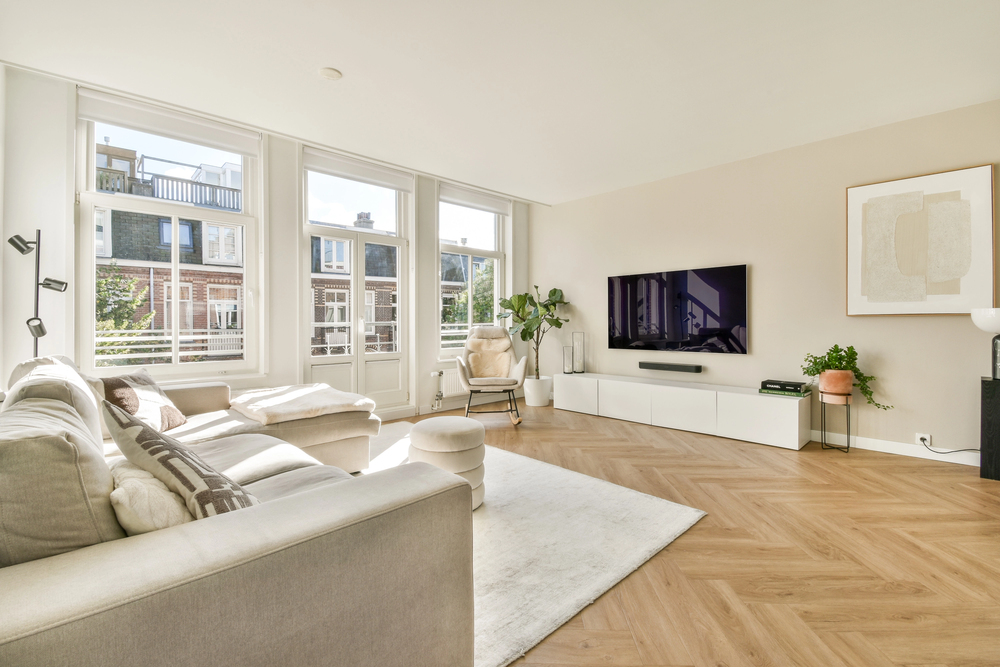
The living room is where life actually happens. It’s where you collapse after work, where the kids build dens out of sofa cushions, where the dog naps in the one sunny patch, and where friends end up when the dinner party moves on. So it makes sense that the floor in here needs to look stylish… and cope with a lot!
The tricky part is that there are so many flooring options now, and prices range from a few pounds a square metre to well over £100. Here at Funky Flooring, we’ve put together our favourite living room flooring ideas for every style and budget, with honest thoughts on what each one is like to live with, so you can narrow things down before you start ordering samples.
Contents:
- What to Think About Before You Choose
- The Best Flooring Options for Living Rooms
- Living Room Flooring Ideas by Style
- Living Room Flooring on a Budget
- Quick Comparison
- Frequently Asked Questions
- Final Thoughts
What to Think About Before You Choose
Before you fall in love with a floor, stop and think about how you really use your living room. A little thought now can save you a lot of money later. Start with these questions:
- Who uses the room? Young children, teenagers who drag furniture about and pets with claws all put very different demands on a floor. If you’ve got four-legged family members, our guide to pet-friendly flooring is well worth a read.
- How warm and quiet do you want it? Living rooms are for relaxing, so warmth underfoot and how much noise a floor makes matter more here than in a hallway or kitchen. This is especially true in flats, where the neighbours below will thank you for a good underlay.
- Is it an open plan? If your lounge flows into the kitchen or dining area, one continuous floor usually looks best, so it needs to cope with the toughest room in the space.
- Do you have underfloor heating? Some floors work far better with it than others. Our guide to the best flooring for underfloor heating explains which ones to choose.
- What’s your real budget? Remember to include underlay, fitting, door bars and skirting work, not just the price per square metre of the flooring itself.
The Best Flooring Options for Living Rooms
Wood Flooring
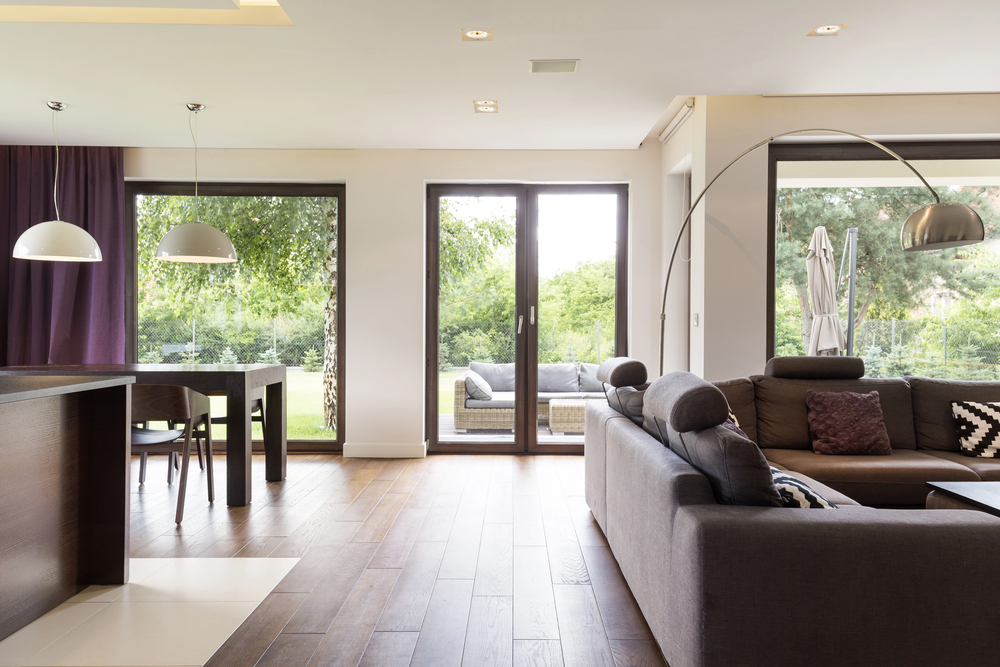
There’s a reason wood flooring is still the first thing most people picture when they think of a beautiful living room. It’s warm, it ages well and it suits almost every style of home, from Victorian terraces to new builds. A living room with wooden floors never seems to go out of style, in a way that few other materials can match.
You’ve got two main choices with wooden flooring:
- Solid wood is cut from a single piece of timber. It can be sanded and refinished many times over its life, but it’s more sensitive to changes in temperature and humidity, so it isn’t ideal over underfloor heating or in a room that gets very warm.
- Engineered wood has a real wood top layer bonded to a stable plywood or softwood core. It looks exactly the same once it’s down, but it’s far less likely to move, cup or gap.
For most living rooms, we’d point people towards engineered oak flooring. Oak is hard-wearing, has a lovely natural grain and comes in everything from pale Scandi tones to rich dark oak flooring. Look for a wear layer of 3mm or more if you want the option to sand it later on.
If you love the character of older timber, it’s also worth exploring reclaimed wood flooring, which brings real history and charm to a period lounge.
The downsides? Wood will pick up scratches and dents from furniture, toys and pets over time, and it’s one of the pricier options. Felt pads under furniture and a decent rug in high-traffic spots go a long way. If your old floorboards have started to make noise, our post on creaky floors explains what’s going on underneath.
Laminate Flooring
Living room laminate flooring is a great way to get the look of wood without the price tag. Modern laminate is surprisingly realistic, with embossed textures that follow the grain pattern, and it’s tough enough to shrug off scuffs from everyday family life. An AC4 rating is more than enough for most lounges.
It’s also quick to fit thanks to click-together boards, which is why it’s a favourite for DIY projects. The key is the underlay. A good quality underlay for laminate flooring makes a huge difference to how the floor sounds and feels, cutting down that hollow, clicky noise and adding a bit of warmth. If you’re laying it over a concrete subfloor, choose an underlay with a built-in damp-proof membrane.
Standard laminate doesn’t like standing water, which isn’t usually an issue in a living room, but it’s worth considering if your lounge opens onto the kitchen or garden. Our guide to waterproof laminate flooring covers the more water-resistant ranges. And when it comes to cleaning, it’s best to put the steam mop away, as we explain in our article: Can you use a steam mop on laminate floors?
Vinyl Flooring and LVT
Vinyl flooring for the living room has come a long way from the thin, shiny lino many of us grew up with. Luxury vinyl tile (LVT) is now one of the most popular choices for lounges, and for good reason. It’s warm and soft underfoot, quiet to walk on, fully waterproof and very easy to look after.
LVT comes in incredibly convincing wood and stone effects, plus some fun designs like vinyl parquet flooring, chequered patterns and even terrazzo vinyl flooring if you fancy something a little more playful. You’ll also come across rigid core options such as SPC flooring, which has a stone plastic composite core that makes it very stable and great for floors that aren’t perfectly level.
Our ultimate guide to luxury vinyl flooring explains the different types in more detail, and if you’re working with an older floor, check our guide on laying LVT over different subfloors before you order. Once it’s down, keeping it looking fresh is easy with our tips on how to clean and maintain vinyl flooring.
Floor Tiles for the Living Room
Tiling a living room is less common in the UK than in warmer countries, but it’s growing in popularity, especially in open plan homes and extensions. Large format porcelain living room floor tiles look sleek and modern, are almost indestructible and are a dream to keep clean.
The main drawback is that tiles can feel cold and hard, which isn’t ideal for a room where you want to feel cosy. That’s why tiles in the living room work best with underfloor heating and a large, soft rug to zone the seating area. They’re also a bigger job to fit, as the subfloor needs to be solid, flat and rigid.
If you love the look of patterned tiles but want something warmer, take a look at our guide to Victorian tile effect vinyl flooring for a softer alternative.
Carpet
It would be wrong to write about living room flooring without mentioning carpet. Nothing beats it for warmth and comfort, it’s brilliant at soaking up noise, and it’s a safe, soft surface for babies who are crawling or toddlers taking their first steps.
The downsides are that carpet holds onto dust and allergens and is harder to keep clean, particularly with pets. If you go for carpet, choose a hard-wearing fibre and a stain-resistant finish. Our guide on how to tell if a carpet is good quality will help you avoid anything that flattens quickly, and if you’ve got a cat, our tips on how to stop a cat scratching carpet may come in handy.
If you’re looking for flooring alternatives to carpet but still want softness, a hard floor with a large rug gives you the best of both. Just make sure it stays put – our guide on how to stop rugs moving has some easy fixes.
Living Room Flooring Ideas by Style
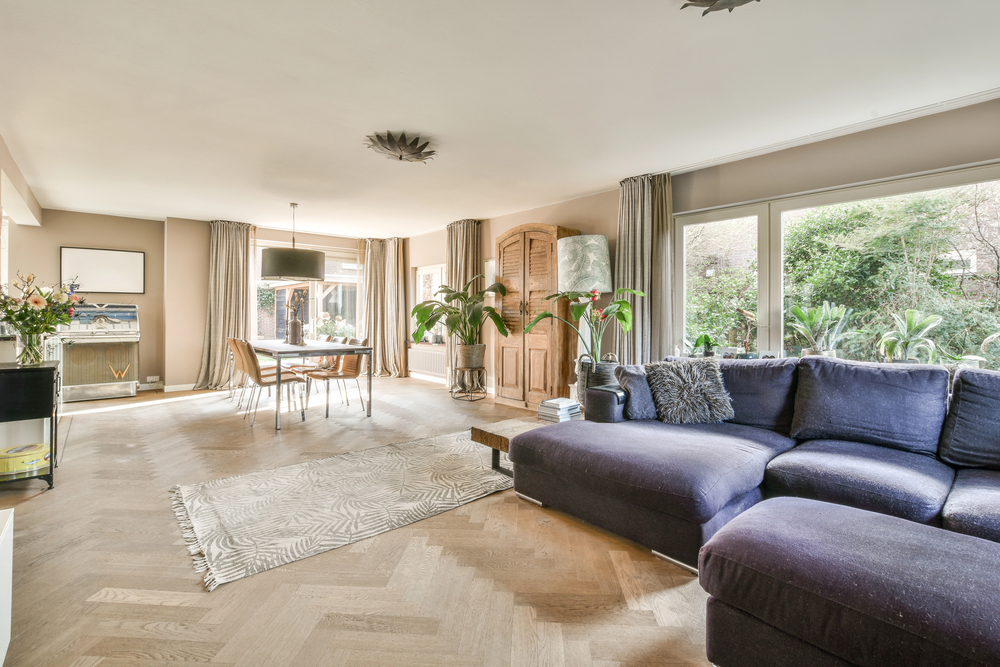
Once you know which material suits your household, the fun part is choosing a look. Here are a few living room floor ideas to get you started.
Modern and Minimal
For a modern living room, keep the floor calm and continuous. Wide-plank engineered oak in a natural or lightly brushed finish, large format porcelain tiles or a polished concrete-effect LVT all create a clean backdrop. Grey flooring was the go-to modern choice for years, and grey wood flooring still works well in contemporary homes, though warmer, natural tones are now taking over. Our post on the best flooring trends for 2026 has more on what’s in style right now.
Classic and Period
In a Victorian or Edwardian home, real wood floorboards or oak wood flooring in a herringbone or chevron pattern feel just right. Herringbone adds instant character and looks especially good in a bay-fronted sitting room. Our ultimate guide to herringbone flooring walks you through the options, including more affordable vinyl and laminate versions.
Warm and Cosy
If your idea of the perfect lounge is a snug space with a log burner and a big sofa, go for warm mid to dark oak tones, a textured wood-effect LVT or a soft, deep carpet. Dark wood living room floors look rich and inviting, but they do show dust and pet hair more than mid-tone floors, so bear that in mind if you’ve got a moulting dog.
Light and Airy
In a small living room, or one that doesn’t get much natural light, pale floors make a big difference. White oak, light ash-effect laminate or soft beige tones bounce light around and make the space feel bigger. Running planks along the longest wall helps the room feel longer too.
Open Plan Living
For an open plan kitchen and living rooms, the best approach is usually one floor throughout. LVT and porcelain are the most practical choices because they handle kitchen spills as easily as lounge footfall. Our kitchen flooring options guide has more ideas for joining the two spaces. Where a hard floor meets a carpeted room, a neat threshold makes all the difference, and our guide to carpet to hardwood transitions explains the options.
Living Room Flooring on a Budget
A beautiful living room floor doesn’t have to cost the earth. If you’re looking for cheap flooring ideas, these are the options we’d suggest:
- Laminate is the cheapest hard flooring that still gives a convincing wood look. Spend a little more on the underlay rather than the boards and it’ll feel much more expensive than it is.
- Sheet vinyl is the most affordable option of all and is very quick to fit, making it ideal for a rental or a quick refresh.
- Click LVT costs more than laminate but is waterproof, warmer and very easy to fit yourself.
- Engineered wood with a thinner top layer gives you real wood at a lower price than premium boards, though you’ll have fewer chances to sand it later.
- Fitting it yourself can save a good chunk of the cost with click systems. Our post on DIY flooring vs professional installation will help you decide whether it’s worth giving it a go.
One word of warning: going for the very cheapest option isn’t always the best value. A floor that wears out in three years ends up costing more than one that lasts fifteen. Our post on the most regretted flooring choices is full of lessons from people who found this out the hard way.
Quick Comparison
| Flooring | Rough price per m² (materials) | Warmth underfoot | Durability | Best for |
|---|---|---|---|---|
| Sheet vinyl | £10 to £25 | Warm | Good | Tight budgets and rentals |
| Laminate | £10 to £35 | Fairly warm | Very good | Affordable wood looks |
| LVT / SPC | £20 to £60 | Warm | Very good | Families, pets and open plan |
| Carpet | £10 to £50 | Very warm | Moderate | Cosy, quiet lounges |
| Engineered wood | £35 to £90 | Warm | Good | Natural looks over underfloor heating |
| Porcelain tiles | £25 to £80 | Cold (unless heated) | Excellent | Modern open plan spaces |
| Solid wood | £50 to £120 | Warm | Good (can be refinished) | Period homes and long-term value |
Prices are a rough guide to materials only and vary by brand, finish and supplier. Fitting, underlay and accessories are extra.
Living Room Flooring FAQs
What is the best flooring for a living room?
There’s no single answer, as it depends on your household and budget. For most families, LVT is the best all-rounder because it’s warm, quiet, waterproof and hard-wearing. Engineered oak is the best choice if you want real wood, laminate is the best value, and carpet is the cosiest.
What is engineered flooring?
Engineered flooring is made from a top layer of real hardwood bonded to several layers of plywood or softwood underneath. This layered construction makes it more stable than solid wood, so it’s less likely to warp and can usually be laid over underfloor heating.
What is SPC flooring?
SPC stands for stone plastic composite. It’s a type of rigid core vinyl with a dense core made from limestone powder and PVC. It’s fully waterproof, very stable and handles slightly uneven subfloors better than flexible LVT, which makes it a good choice for open plan spaces.
Are tiles a good idea in a living room?
They can be, especially in modern open plan homes and extensions. Floor tiles for the living room are extremely durable and easy to clean, but they feel cold without underfloor heating, so most people add a large rug to soften the seating area.
Do I need underlay for laminate flooring?
Yes. The underlay smooths out small dips in the subfloor, reduces noise and adds a little warmth. On a concrete floor, use one with a damp-proof membrane. Some laminate boards come with underlay already attached, in which case you won’t need a separate layer.
Final Thoughts
The best living room flooring is the one that fits the way you actually live. Engineered oak and solid wood bring timeless warmth, LVT is a brilliant all-rounder for busy homes, laminate gives you the wood look for less, tiles suit sleek open plan spaces, and carpet is hard to beat for pure comfort. Whatever your style and budget, there’s a floor out there that’ll make your lounge feel like home.
If you’re planning floors across the whole house, our guides to which flooring is best for each room and choosing the perfect flooring for your home are handy next reads, along with our tips on the best flooring for hallways. And if you’re thinking about selling in the next few years, it’s worth knowing how flooring impacts home resale value.