

There’s a particular kind of happiness in padding across a warm floor on a cold morning, no dressing gown sprint to the radiator required. It’s little wonder underfloor heating has gone from luxury extra to a genuine consideration for most UK renovations, whether that’s a full wet system going into a new extension or an electric mat going under the tiles in a small bathroom.
But here’s the catch: not every floor covering is built to sit on top of a heat source, and the wrong choice doesn’t just look wrong, it can stop your system working properly or, in the worst case, damage the floor itself. Here at Funky Flooring, we’ve put together everything you need to know before you choose whether or not to go ahead with underfloor heating.
Contents:
- Why Your Flooring Choice Matters With Underfloor Heating
- The Best Flooring Options for Underfloor Heating
- Flooring to Think Twice About
- Room-by-Room Considerations
- Getting the Installation Right
- Final Thoughts
Why Your Flooring Choice Matters With Underfloor Heating
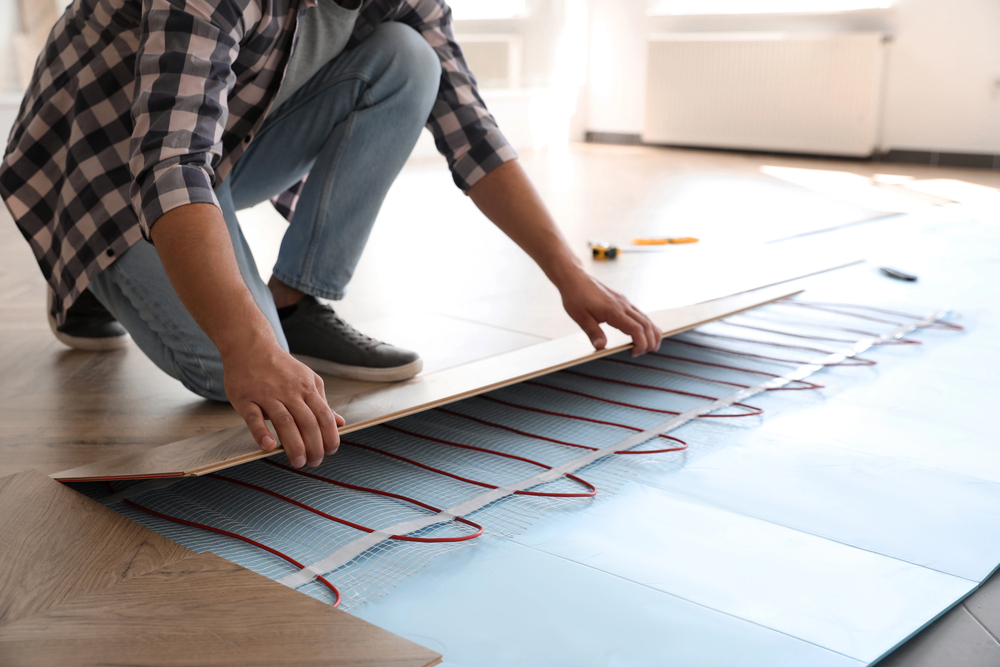
Underfloor heating only works well if the heat it generates can actually get through the floor and into the room. Everything you put on top, the flooring itself, any underlay, even a rug, acts as a barrier to some degree. The question is how much of one.
That’s measured using something called a tog rating, the same scale used for duvets. The lower the tog, the less resistance there is to heat passing through, and the more efficiently your system runs. Most manufacturers recommend keeping the combined tog of your flooring and any underlay below 1.5, and rarely above 2.5, though it’s always worth checking the exact figure for the system you’ve got, since electric and water-based (wet) systems can have slightly different tolerances.
It also matters what’s underneath your flooring. A solid screed subfloor holds and releases heat evenly and copes well with most coverings. A suspended timber subfloor heats up and cools down more quickly, which can affect how certain floors, particularly solid wood, respond to the temperature changes over time.
Top tip: If you’re not sure what tog rating your current or planned flooring and underlay add up to, ask your installer or manufacturer directly rather than guessing. Getting this wrong is one of the most common reasons people find their underfloor heating doesn’t work when actually it’s working fine, it just can’t get through the floor.
The Best Flooring Options for Underfloor Heating
Tiles (Porcelain and Ceramic)
If you’re after the most efficient option, tile is genuinely hard to beat. Porcelain and ceramic are dense, thin and excellent conductors of heat, which is exactly why tiled kitchens and bathrooms are the classic underfloor heating pairing. They heat up quickly, hold that heat well, and there’s no tog-related juggling act to worry about.
The one thing to plan around is the adhesive and any levelling compound, which should be a flexible, heat-tolerant type designed for use over underfloor heating rather than a standard fix. If you like the warmth and practicality of tile but want something with a bit more character, our guide to Victorian tile-effect vinyl flooring covers a similar option that performs just as well over underfloor heating, without the cold, hard-wearing tile itself.
Engineered Wood Flooring
Real wood underfoot with the warmth of underfloor heating is a popular combination, but it needs to be engineered wood rather than solid. Engineered boards are built in layers with the grain running in different directions, which makes them far more dimensionally stable when the temperature fluctuates. Solid wood, by contrast, expands and contracts more dramatically with heat, and that movement is where problems start.
As a rule of thumb, thinner boards (around 14mm or under) with a wear layer that isn’t excessive tend to respond best, since there’s less mass for the heat to work through. If you’re drawn to the character of older or reclaimed boards, it’s worth reading our reclaimed wood flooring guide first, as older timber can behave far less predictably under sustained heat than a new engineered product, and it’s not always the safest pairing with underfloor heating.
Laminate Flooring
Laminate tends to be one of the easier options here. It’s thin, it’s rigid, and because the core is dense HDF rather than solid timber, it just doesn’t swell or shift the way wood can once heat and moisture get involved. Waterproof laminate in particular has become a popular choice for underfloor heating installations, since its core is specifically built to resist the kind of moisture and temperature swings a heated floor can bring, and our guide to waterproof laminate flooring goes into more detail on how that construction works.
Whatever laminate you choose, keep an eye on the total thickness of the board plus underlay, and always check the manufacturer’s own guidance before fitting, since not every laminate range is rated for use over underfloor heating.
LVT and Luxury Vinyl Flooring
Vinyl is another strong performer, largely because it’s thin and, when fitted correctly, sits in direct contact with the subfloor rather than floating above it on a cushioning layer. Glued-down LVT in particular conducts heat efficiently and is widely used in kitchens, bathrooms and hallways with underfloor heating already installed.
Subfloor preparation matters more here than with most other coverings, since any gaps or unevenness will show through a thin vinyl product far more than they would under carpet or laminate. If you’re working over an existing subfloor rather than a fresh screed, our guide on laying LVT over different subfloors is worth a read before you commit to a heating system and flooring combination. For more on why LVT has become such a popular all-rounder generally, our ultimate guide to luxury vinyl flooring covers the wider pros and cons.
Carpet
Carpet with underfloor heating isn’t off the table, but it does take a bit more care to get right, since carpet fibres and their backing are naturally insulating, which works against what you’re trying to achieve. The trick is choosing a low-tog carpet, generally a shorter, denser pile rather than anything thick or shaggy, and pairing it with a low-tog underlay specifically designed for use over heated floors, rather than the thick, cushioned underlay you’d choose for comfort alone.
Wool and other natural fibres tend to sit on the higher end of the tog scale, so if efficiency is a priority, a synthetic or wool-blend carpet built for underfloor heating use is usually the safer bet. It’s also worth thinking about overall quality here, not just tog rating, since a poorly made carpet will show wear faster under the additional stress of regular heat cycling. Our guide on how to tell if a carpet is good quality is a useful read if you’re carpet shopping with underfloor heating in mind.
Parquet and Herringbone Wood Flooring
The smaller block format used in parquet and herringbone flooring actually works in its favour here. Because each piece is relatively small compared with a long plank, there’s less material to expand and contract as one unit, which generally makes a well-made engineered herringbone floor a safer bet over underfloor heating than a wide-plank alternative. It’s a popular choice for exactly that reason, warmth underfoot with a more traditional look. If you’re considering the pattern, our ultimate guide to herringbone flooring walks through the different styles and what to expect from installation.
Flooring to Think Twice About
A few options are best approached with caution, or avoided altogether, over underfloor heating:
- Solid hardwood – too prone to expansion, contraction and, over time, gaps or creaking as the wood repeatedly reacts to heat. If creaking is already a concern in your home, our guide on why floors creak explains some of the other causes worth ruling out too.
- Thick, high-pile carpets and rugs – lovely underfoot but effectively insulate the heat away rather than letting it through, which defeats the point of having the system at all.
- Loose rugs in general – if you want one anyway, keep it thin, avoid rubber or foam-backed types that trap heat unevenly, and make sure it’s properly anchored down. Our guide on how to stop rugs moving is handy here, since a rug that’s constantly shifting over underfloor heating is also more likely to curl or wear unevenly at the edges.
Room-by-Room Considerations
Underfloor heating isn’t something you’d want (or need) equally in every room of the house and the right flooring can vary slightly depending on where it’s going.
In kitchens, tile, LVT and waterproof laminate are the usual front-runners, largely because they cope well with spills as well as heat. Our kitchen flooring options guide covers the wider decision beyond underfloor heating if you’re still weighing up the room as a whole.
Bathrooms and small bathrooms in particular are where underfloor heating earns the most obvious lifestyle upgrade, no cold tiles first thing. Tile and vinyl are the standout choices for wet areas, and our small bathroom flooring ideas guide has more on making the most of a compact space.
If you’re choosing flooring for underfloor heating across a whole home rather than room by room, it’s worth stepping back and reading our wider guide on which flooring is best for each room, since underfloor heating is just one of several factors, alongside footfall, moisture and lifestyle, that should shape the final decision.
Getting the Installation Right
A couple of things trip people up at the installation stage more than the flooring choice itself.
If you’ve had a new screed laid, it needs proper time to dry before any flooring goes down, rushing this is one of the most common causes of problems later on. As a general guide, allow around a day per millimetre of screed thickness for the first 40mm, and roughly half that per millimetre beyond it, though your installer will be able to confirm the exact timeline for your specific screed.
It’s also worth commissioning and gradually running the heating system before your final flooring goes down, particularly with wood-based products, so the subfloor and screed have already been through a heat cycle rather than experiencing it for the first time with your new floor sitting directly on top.
Worth knowing: Even once everything’s fitted, most manufacturers recommend bringing the heating up to temperature gradually over the first few days rather than switching straight to full heat, giving the flooring time to acclimatise properly.
Final Thoughts
The best flooring for underfloor heating ultimately comes down to balancing how a material conducts heat with how it looks and feels day to day, tile and vinyl for pure efficiency, engineered wood and laminate for warmth with a more natural finish, and carpet if you’re willing to shop carefully for the right tog rating. Whatever you’re leaning towards, it’s worth checking the manufacturer’s specific guidance before you buy, since not every product within a range is suitable even when the material generally is.
If you’re still weighing up your options, get in touch with the team at Funky Flooring, we’re always happy to talk through what’ll work best for your underfloor heating system and the room it’s going into.