
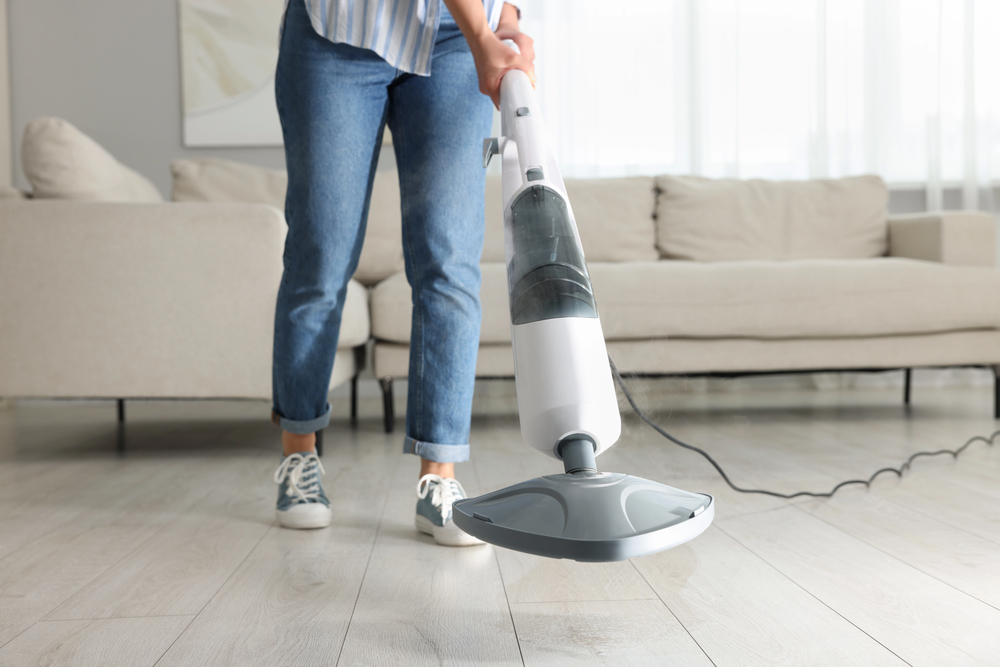
Steam mops promise a lot: no chemicals, no bucket of grubby water, and a floor that’s dry again almost as soon as you’ve finished. It’s easy to see why so many of us reach for one on cleaning day. But if your home has laminate flooring, that same steam which works wonders on sealed tile or stone can cause some serious and expensive problems underneath the surface.
So, can you use a steam mop on laminate floors? The short answer is that it’s best avoided in almost every case. Here at Funky Flooring, we’ve put together everything you need to know about steam mops and laminate, along with the cleaning method we’d actually recommend instead.
Contents:
- Can You Steam Mop Laminate Floors?
- Why Steam and Laminate Flooring Don’t Get Along
- Is There Ever an Exception?
- How to Tell If Steam Has Already Damaged Your Floor
- The Safest Way to Mop Laminate Floors
- Other Mopping Mistakes to Avoid
- Final Thoughts
Can You Steam Mop Laminate Floors?
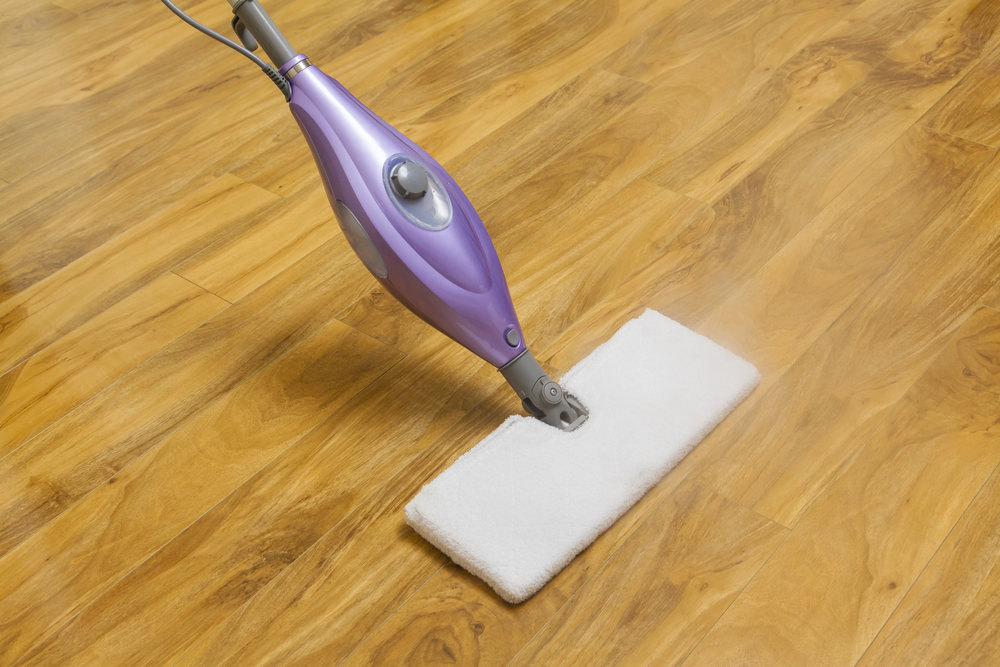
No, as a rule, you shouldn’t use a steam mop on laminate floors, whatever brand of mop you own. Laminate isn’t solid wood. It’s a decorative image layer and a protective wear layer bonded on top of a core board, usually made from high-density fibreboard (HDF). That core is essentially compressed wood fibre, and wood fibre and moisture have never been friends.
A steam mop forces hot water vapour out under pressure, and that moisture has to go somewhere. On laminate, it finds the path of least resistance: down into the seams between planks and into the core itself. Once that happens, the damage is very difficult to undo.
This is different to a properly squeezed-out mop, which is perfectly safe for laminate and is exactly what most manufacturers recommend instead. The problem isn’t moisture in general – it’s heat, pressure and prolonged contact all at once.
Why Steam and Laminate Flooring Don’t Get Along
It comes down to what’s actually inside a laminate plank, and how badly that core reacts when heat and moisture are forced into it under pressure.
How Moisture Gets Into the Core
Laminate boards click together at the joints, and while those joints sit tightly together, they’re rarely watertight. A steam mop pushes hot vapour directly onto the surface, and over repeated passes, that steam works its way into the tiny gaps at each seam. Because the core board is porous, it absorbs the moisture and starts to swell.
The frustrating part is that this damage rarely shows up straight away. Boards can look completely normal for days or even weeks before the edges start to lift, bubble, or feel slightly spongy underfoot. By the time it’s noticeable, the core has usually already swollen, and swollen boards don’t shrink back down once they’ve dried out. It’s the same reason solid wood floors are kept well away from steam cleaners too – moisture forced into the grain causes the exact warping and cupping we warn about in our wooden floor care tips, just with a different core material underneath.
What Manufacturers and Warranties Say
If you check the care instructions that came with your laminate, or almost any major flooring brand’s website, you’ll usually find steam cleaning listed under ‘what not to do.’ Most flooring warranties explicitly exclude water damage caused by steam mops, so using one isn’t just a risk to your floor, it can also invalidate any cover you’d otherwise have if something went wrong. It isn’t only laminate that carries this warning, either: even fully sealed vinyl can suffer once steam works its way underneath the protective layer, which is why steam mops make the ‘avoid’ list in our vinyl cleaning and maintenance guide as well.
Top tip: Before using any electric mop on laminate, it’s always worth a quick check of the manufacturer’s own care guide, or asking your installer. It only takes a couple of minutes, and it’s usually the first thing that gets checked if a warranty claim is ever needed.
Is There Ever an Exception?
Modern waterproof laminate is a bit of a different story. Unlike the water-resistant boards most homes have, which only tolerate the odd damp mop before liquid finds its way into the seams, genuinely waterproof laminate is built with hydrophobic coatings and tightly sealed, water-repellent joints specifically designed to stop liquid getting through. In short, a floor like this can shrug off a lot more moisture than standard laminate.
Even so, most manufacturers of waterproof laminate still advise against steam mops. Being waterproof against a spilt glass of water is not the same as tolerating sustained heat and pressurised steam against the joints and adhesive, which can weaken over time even on the toughest boards. Unless your specific product’s documentation says otherwise in black and white, the safest assumption is still no.
How to Tell If Steam Has Already Damaged Your Floor
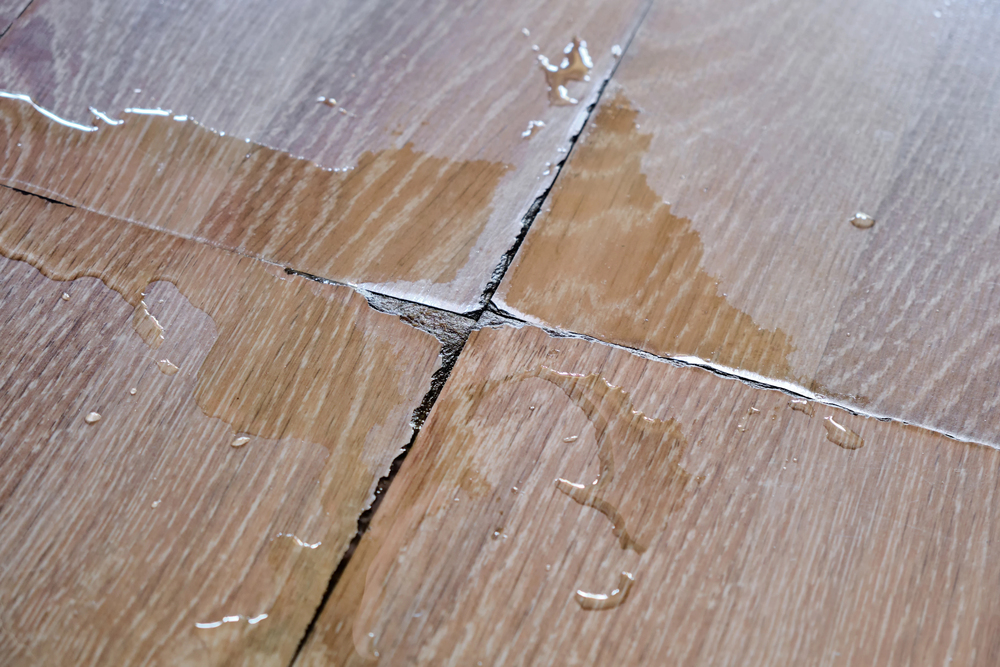
If you’ve used a steam mop on your laminate in the past and you’re not sure whether any harm has been done, keep an eye out for:
- Lifting or peeling edges: Boards that no longer sit flush and seem to be curling upwards at the seams.
- Cloudy or whitish patches: A hazy discolouration where moisture has got underneath the wear layer.
- Soft or spongy spots: Areas that feel slightly different underfoot compared to the rest of the floor.
- Widening gaps: Seams that look wider than they used to, or boards that have started to separate.
- Bubbling texture: A slightly raised or rippled feel along the joints.
Worth knowing: swollen boards often start creaking underfoot before any lifting is visible at all, since the extra bulk changes how boards sit against each other and the joists beneath. If creaking is the only symptom you’ve noticed and the floor still looks fine, it’s not necessarily a steam mop problem, our blog on why floors creak runs through the other common causes, from settling joists to seasonal humidity swings.
If you do spot any of the signs above, stop steam mopping straight away and let the area air dry as much as possible. Depending on how far the swelling has gone, affected boards can sometimes be replaced individually rather than needing a full re-lay, so it’s worth getting a professional opinion before assuming the worst.
The Safest Way to Mop Laminate Floors
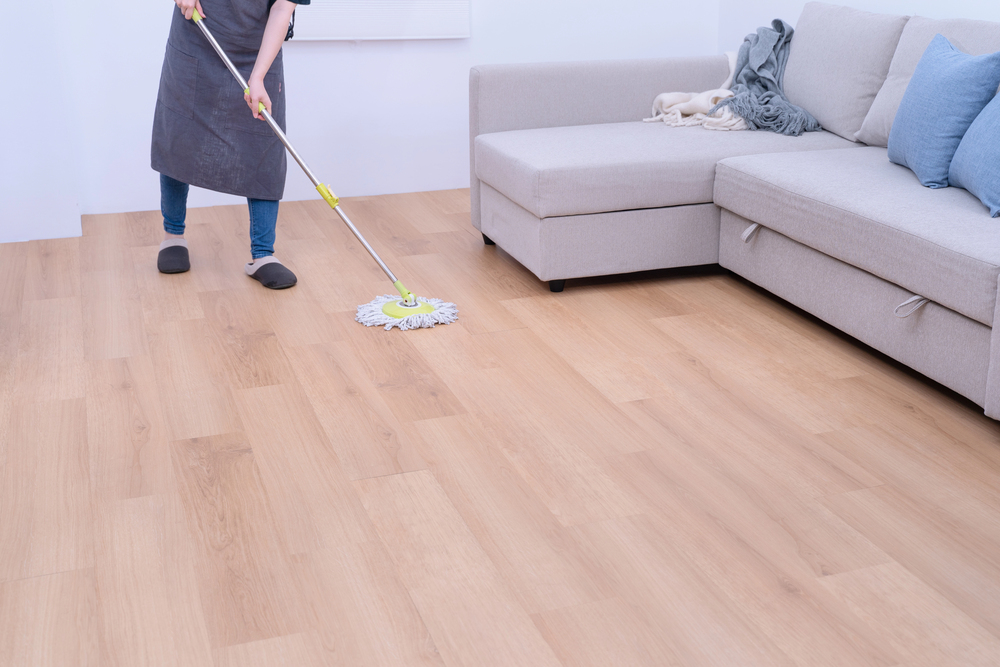
What You’ll Need
- A soft microfibre flat mop or spray mop (avoid string or sponge mops, which hold far more water)
- A pH-neutral laminate floor cleaner, or a few drops of washing-up liquid diluted in warm water
- A dry microfibre cloth or a second dry mop head for finishing
Step-by-Step Method
- Sweep or vacuum first to lift grit and dust, mopping over debris is what causes most of the fine scratches people notice on laminate.
- Dip your mop in the cleaning solution, then wring it out thoroughly. It should feel damp, not wet, with no water dripping off it.
- Work in small sections, mopping with the direction of the planks rather than against them.
- Go over the floor a second time with a dry cloth or dry mop pass, paying particular attention to seams and skirting boards where water likes to linger.
- Never leave puddles to air dry on their own – standing water is exactly what causes swelling, steam mop or not.
For everyday upkeep, mopping once a week is usually plenty for most households, with a bit more frequency if you’ve got children, pets, or a busy kitchen floor. Spills, on the other hand, should be wiped up immediately rather than left until your next scheduled mop.
Other Mopping Mistakes to Avoid
- Vinegar or bleach solutions: both are acidic or highly alkaline and can gradually dull or discolour the wear layer, even though they won’t cause damage overnight.
- Wax, polish or oil-based cleaners: these are designed for solid wood, not laminate, and tend to leave a cloudy film behind.
- Reaching for the mop on dried, stubborn marks: a splash of dried paint, for example, won’t budge with water alone and just wears down the wear layer if you scrub. It needs a plastic scraper and a dab of rubbing surgical spirit or isopropyl alcohol instead, which we walk through on how to remove paint from a laminate floor.
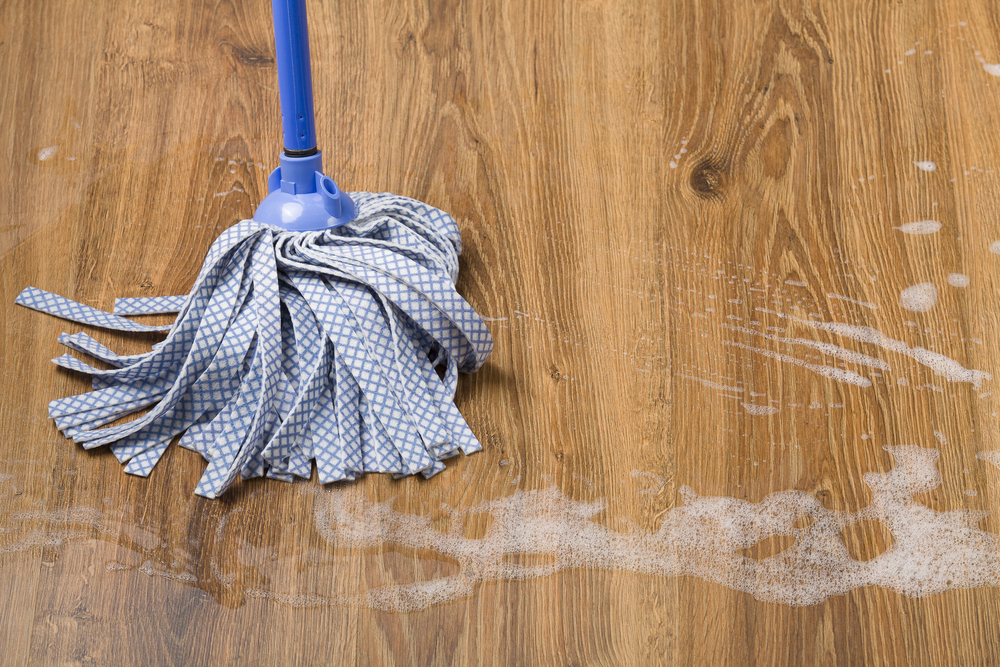
- Soaking string or sponge mops: they hold far more water than a microfibre flat mop and make it easy to leave excess moisture behind.
- Skipping doormats: grit tracked in from outside is one of the biggest causes of scratches, so a decent mat at each entrance goes a long way.
- Robot mops on a high-water setting: many robot vacuum-mop combinations are fine on laminate, but only on their lowest moisture setting – check the settings before letting one loose unattended.
Final Thoughts
If you’re weighing up whether to use a steam mop on laminate floors, the safest answer is still no, regardless of the brand sitting in your cupboard. The heat and pressure that make steam mops so good at cutting through grime elsewhere are exactly what puts laminate’s core board at risk. A well squeezed microfibre mop and a pH-neutral cleaner will do the job just as well, without putting your warranty, or your floor on the line.