
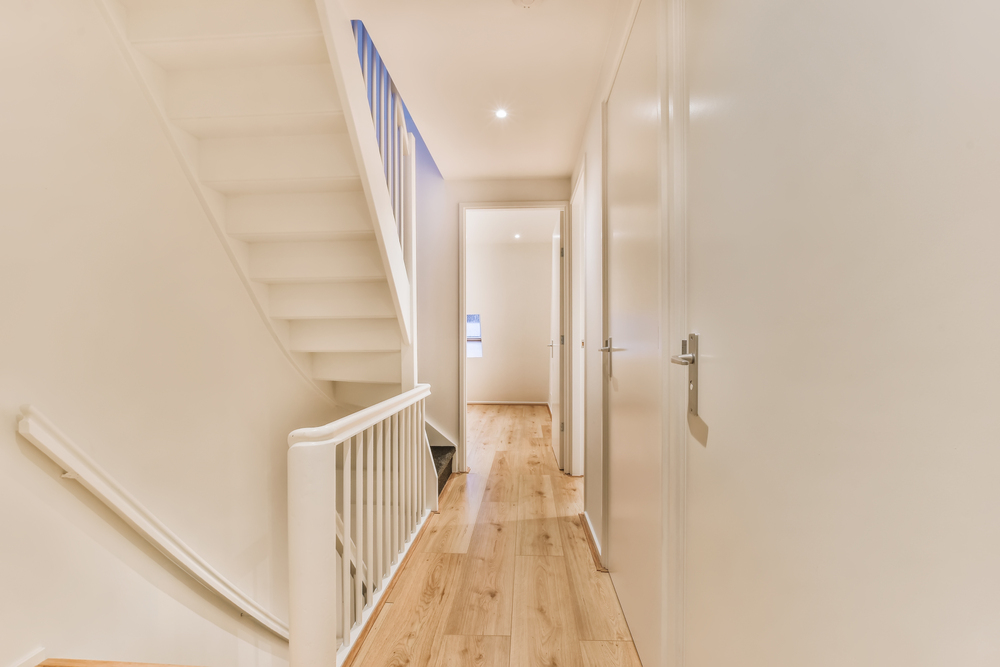
Your hallway works harder than almost any other room in the house. It’s the first thing guests see, the place where wet coats get shrugged off and muddy boots get kicked off, and the route every single person (and pet) takes on the way in and out. It’s also usually the room people think about last when they’re planning new floors.
Yet choosing the right hallway flooring can make a real difference to daily life, and the wrong choice means it’s usually the first floor in the house to look tired. Here at Funky Flooring, we’ve pulled together our honest suggestions on the best flooring for hallways, what each option is like to live with, and a few hallway flooring ideas to help you picture the finished space.
Contents:
- What Makes a Good Hallway Floor?
- The Best Flooring Options for Hallways
- Narrow and Small Hallway Flooring Ideas
- Practical Tips for a Floor That Lasts
- Final Thoughts
What Makes a Good Hallway Floor?
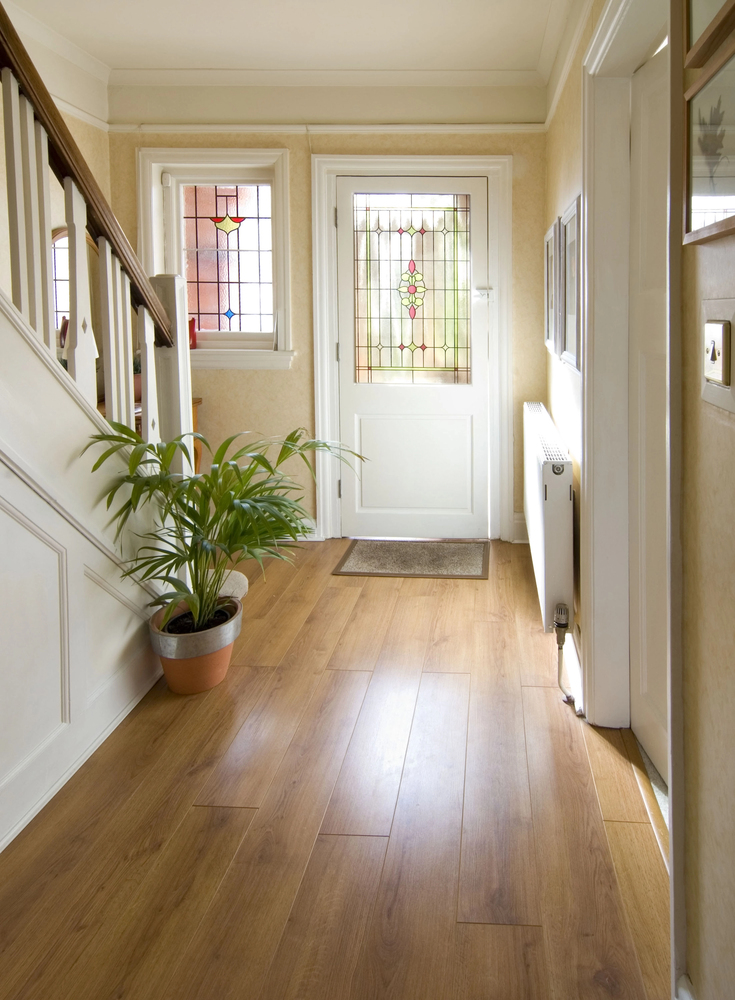
Before getting into materials, it helps to think about what your hallway actually puts a floor through. Most flooring for hallways needs to handle four things well:
- Heavy footfall. Even in a small home, the hallway sees more traffic than any other room. Look for a hard-wearing surface, and with vinyl or laminate, check the wear layer or AC rating rather than going by looks alone.
- Dirt and grit. Grit carried in on shoes acts like sandpaper on a floor over time. A surface that’s easy to sweep and mop, and doesn’t show every speck, will save you a lot of effort.
- Water. Rain, snow, dripping umbrellas and wet dog paws all end up in the hall. Water-resistant or fully waterproof flooring is a sensible choice, especially near the front door.
- Looks and flow. Your hallway often connects to the kitchen, living room and stairs, so the floor needs to sit comfortably next to everything around it. It’s also the first impression of your home, which is worth remembering if you’re thinking about selling. Our piece on how flooring impacts home resale value goes into that in more detail.
The Best Flooring Options for Hallways
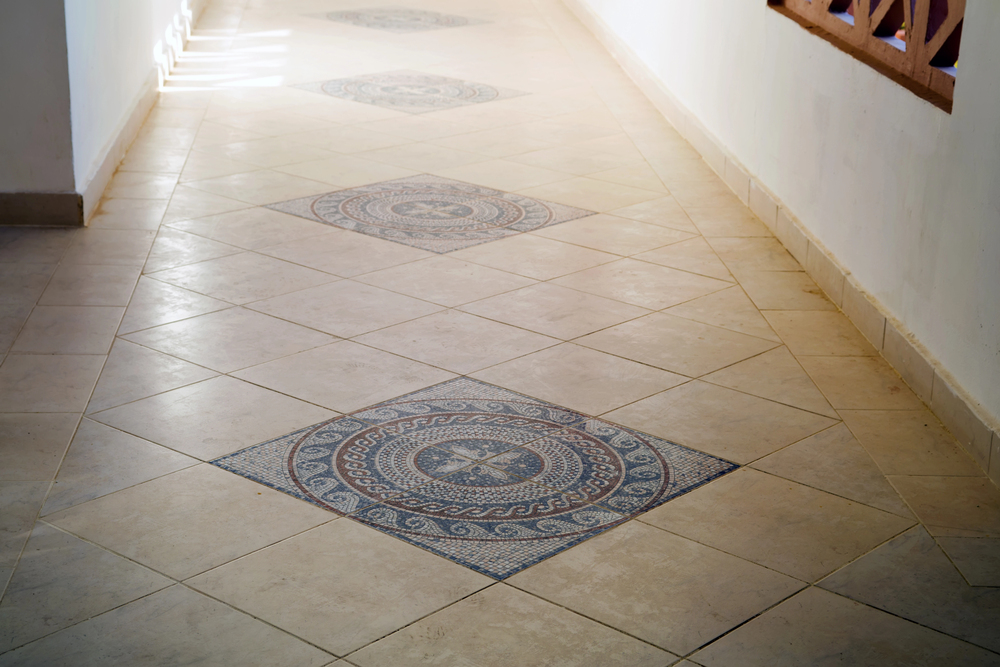
Hallway Tiles (Porcelain and Ceramic)
If pure toughness is top of your list, hallway tiles are very hard to beat. Porcelain in general is incredibly hard and hardly absorbs any water, so mud, grit and wet boots barely leave a mark. A quick sweep and mop is all it takes to keep a tiled hallway looking fresh.
There are a few downsides to keep in mind, though. Tiles can feel cold underfoot in winter, and anything dropped on them is more likely to break. They’re also a bigger job to fit than vinyl or laminate, since the subfloor needs to be solid and level. Choose a darker or mid-tone grout for entrance hall tiles, as pale grout near the front door picks up dirt quickly.
If you love the idea of tile but not the chill, it pairs brilliantly with underfloor heating. Our guide to the best flooring for underfloor heating explains why.
Vinyl Flooring and LVT
For most busy homes, vinyl flooring for the hallway is the best all-round choice. Luxury vinyl tile (LVT) is waterproof, warmer and softer underfoot than ceramic, and far quieter to walk on. It also comes in convincing wood, stone and tile effects, so you can get the look you want without the upkeep.
Good quality LVT flooring in a hallway will handle heavy footfall for years, provided you choose a product with a decent wear layer (0.3mm or more is a good starting point for busy areas). If you’re wondering how it compares to old-fashioned hallway lino, modern LVT is thicker, tougher and much more realistic, though sheet vinyl is still a budget-friendly option for a quick refresh.
Our ultimate guide to luxury vinyl flooring covers the different types in more depth. If your hallway has an older or uneven subfloor, it’s also worth checking our guide on laying LVT over different subfloors before you order.
Laminate Flooring
Laminate flooring in a hallway is a popular choice for good reason. It’s affordable, quick to fit and gives you a wood look without the price tag of real timber. A laminate with an AC4 or AC5 rating is built for heavy traffic and will resist scuffs and scratches from everyday use.
The main thing to watch with standard laminate is water. Puddles left near the door can seep into the joints and cause the boards to swell. That’s why we’d point most people towards a water-resistant product for a hall, and our guide to waterproof laminate flooring goes into how that construction works. When it comes to cleaning, skip the steam mop. Our post on whether you can use a steam mop on laminate floors explains why.
Engineered Wood Flooring
Nothing quite matches the warmth of real wood, and wooden flooring for hallways can look stunning, especially in period homes. For a hall, engineered flooring is the safer option than solid wood. Its layered construction makes it more stable when temperature and humidity change, which happens every time the front door opens.
Wood will pick up some scratches and dents over time, but a lacquered or hard-wax oil finish helps a lot, and many engineered boards can be lightly sanded and refinished later on. Regular care makes a big difference too, and our tips for caring for wooden floors are a good place to start. For a more classic look, herringbone works beautifully in a long hallway, and our ultimate guide to herringbone flooring walks you through the options.
Carpet
Carpet isn’t usually the first thing people think of for a hall, but it has its place. It’s warm, quiet, soft underfoot and great for reducing echo in a tall hallway with stairs. If you’re looking at hallway carpet ideas, choose a short, dense pile, a mid or darker colour that hides dirt, and a hard-wearing fibre such as a wool-rich blend or a stain-resistant synthetic.
Many homes carry the same carpet from the hall up the stairs, so it’s worth reading our guide to the best carpet for stairs alongside this one. Our advice on how to tell if a carpet is good quality will help you avoid anything that flattens or frays quickly.
If you’d rather have a hard floor but still want a bit of softness, floor runners for hallways give you the best of both. Just make sure yours stays put, as a runner that slides about is a trip hazard. Our guide on how to stop rugs moving has some easy fixes.
Quick Comparison
| Flooring | Durability | Water resistance | Warmth underfoot | Best for |
|---|---|---|---|---|
| Porcelain or ceramic tiles | Excellent | Waterproof | Cold (unless heated) | Period homes, muddy entrances |
| LVT / vinyl | Very good | Waterproof | Warm | Most busy family homes |
| Laminate | Good | Water-resistant (waterproof ranges available) | Fairly warm | Budget-friendly wood looks |
| Engineered wood | Good | Limited | Warm | Character and natural style |
| Carpet | Moderate | Poor | Very warm | Quiet halls that lead to stairs |
Narrow and Small Hallway Flooring Ideas
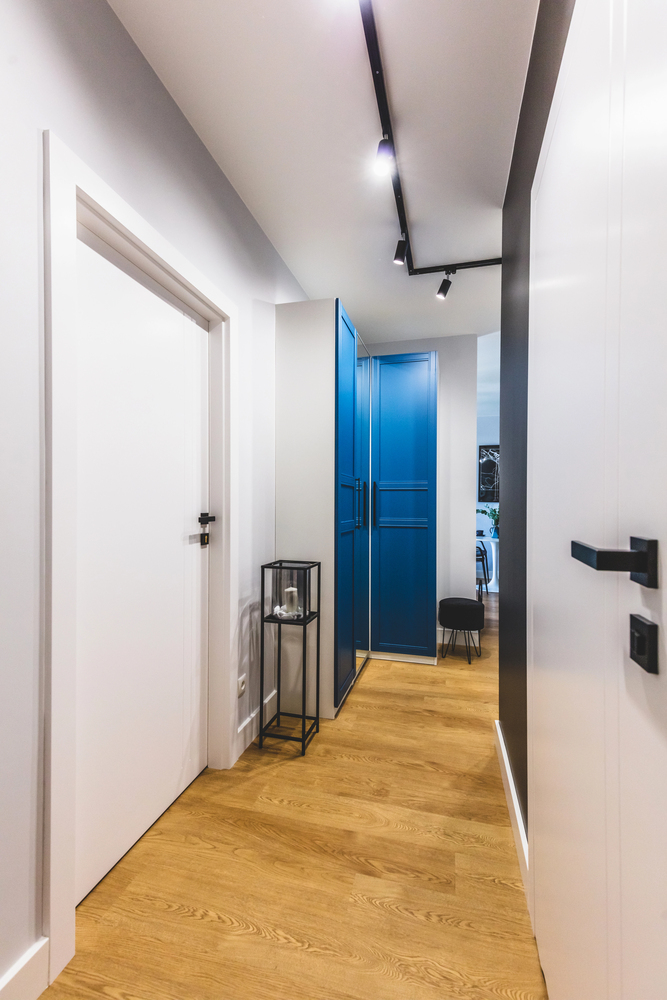
A narrow hallway can feel like a corridor if you’re not careful. A few tricks help it feel bigger:
- Run planks lengthways down the hall to draw the eye through the space.
- Choose lighter colours to bounce light around, but not so pale that every footprint shows.
- Lay tiles on the diagonal to make the floor feel wider.
- Keep the pattern simple in a really small hallway, as busy designs can feel cramped.
One Floor from Hallway to Kitchen
If your hallway opens into the kitchen, running the same floor through both creates a lovely sense of flow and makes the whole ground floor feel larger. LVT and porcelain are the best flooring for a hallway and kitchen combined, since both cope with spills and heavy use. Our kitchen flooring options guide has more ideas. Where the hall meets a carpeted room instead, a neat threshold strip makes all the difference, and our guide to carpet to hardwood transitions explains the options.
Practical Tips for a Floor That Lasts
- Use a good doormat. A proper barrier mat inside the front door traps a surprising amount of grit before it reaches your floor.
- Think about pets. Dogs coming in from a muddy walk are hard on any hallway. Our guide to pet-friendly flooring covers the options that stand up best to claws and paws.
- Clean little and often. A quick sweep every day or two stops grit from scratching the surface. For vinyl floors, our guide on how to clean and maintain vinyl flooring has everything you need.
- Add felt pads to the feet of hall tables, benches and shoe racks.
- Don’t just choose on looks. A hallway floor that’s hard to clean is one of the most regretted flooring choices we hear about.
Final Thoughts
The best flooring for hallways is the one that suits the way your household actually lives. LVT is a brilliant all-rounder for busy family homes, tiles are hard to beat for durability and period charm, laminate is a smart budget choice, engineered wood brings natural warmth, and carpet works well where comfort and quiet come first. If you’re planning floors across the whole house, our guide to which flooring is best for each room is a handy next read.
Still not sure which hallway flooring is right for you? Get in touch with the team at Funky Flooring. We’re always happy to chat through your options and help you find a floor that’ll make a great first impression for years to come.