
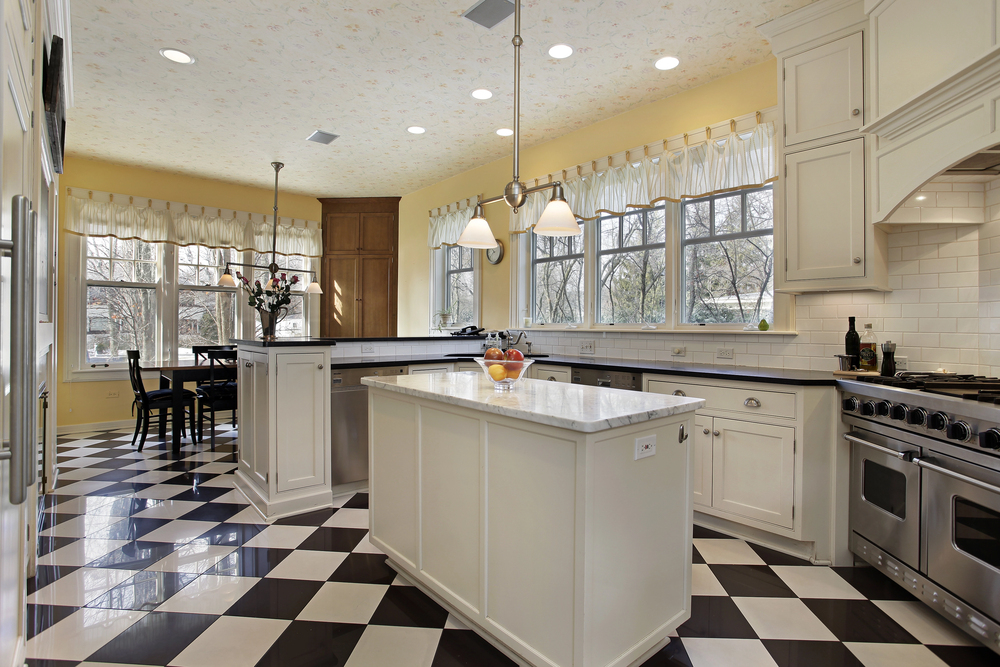
Out of every room in your house, the kitchen floor probably works harder than any other. Spilled sauces, dropped pans, muddy paws padding in from the garden, chair legs scraping back and forth at dinner time – your kitchen floor sees it all, and it needs to look good while it deals with it.
So when it comes to choosing a new kitchen floor, which one looks nicest is only half the question. The real question is: which flooring option actually fits your kitchen, your household, and your budget?
At Funky Flooring, we’ve broken down the main options, what they’re genuinely like to live with, and how to work out which one is the right fit for your home.
Contents:
- What to Think About Before
- Vinyl and LVT Flooring
- Laminate Flooring
- Tile Flooring
- Wood and Multi-layered Wood Flooring
- Lino and Cushion Flooring
- Quick Comparison
- Which One Is Right for Your Home?
- Final Thoughts
What to Think About Before You Choose Your Kitchen Flooring Options
Before you fall in love with a colour or pattern, it’s worth running through a few practical questions. These will narrow your shortlist far more effectively than browsing photos ever will.
How much moisture will the floor deal with?
A kitchen with a dishwasher, sink, and washing machine all in one room needs a genuinely water-resistant floor, not just a wipe clean one.
Do you have underfloor heating, or a tricky subfloor?
Some materials handle heat and uneven concrete far better than others, tile and multi layer wood flooring generally cope best with underfloor heating.
Who and what walks across it?
Kids, dogs, high heels, and heavy pans all wear a floor down differently.
What’s your budget for materials and fitting?
The two aren’t always proportional, some cheaper materials that cost more to install properly.
Do you want it to flow into your dining or living space?
Open-plan kitchens often need flooring that reads well across a bigger area, not just under the units.
Keep these in mind as we go through the options below.
Vinyl and LVT Flooring
Vinyl is one of the most popular choices for UK kitchens, and it’s easy to see why. Modern sheet vinyl and luxury vinyl tile are almost completely waterproof, comfortable underfoot, and available in styles that convincingly mimic wood, stone, or tile.
Good for: Families, pet owners, kitchens with young children, anyone who wants a warmer, softer floor than tile without sacrificing water resistance.
Worth knowing: Cheaper vinyl can dent under heavy furniture, and sharp objects (think a dropped knife) can nick the surface. LVT is more durable but comes at a higher price point, and since it’s often laid over an existing floor, the condition of your subfloor will affect how well it sits and lasts.
Laminate Flooring
Laminate has a reputation for being a living room material, but modern waterproof laminate has genuinely changed the game for kitchens, giving you the warmth of a wood look without the price tag of real timber.
Good for: Budget-conscious renovations, anyone who wants a wood-effect floor that’s easier on the wallet than engineered wood.
Worth knowing: Not all laminate is created equal, standard laminate can swell if water sits on it, so it’s worth checking the spec carefully before you buy for a kitchen. And if a stray paint roller ever finds its way onto the floor during a repaint, paint can be lifted off laminate without much drama, so it’s not the disaster it first looks like.
Tile Flooring
Tile is the classic kitchen floor for a reason: it’s tough, fully waterproof, and comes in an almost endless range of colours and patterns. Porcelain, in particular, is a brilliant option for busy kitchens because it barely wears at all.
Good for: Kitchens with underfloor heating (tile conducts heat brilliantly), households that want a floor built to outlast the kitchen units themselves, and anyone drawn to bold pattern or period style.
Worth knowing: Tile is hard and cold underfoot without heating beneath it, and dropped glasses or plates don’t stand much of a chance. If you love the look of patterned period tile but want something a little softer and more comfortable underfoot, Victorian tile effect vinyl gets remarkably close to the real thing without the cold, hard downsides.
Wood and Multi-layered Wood Flooring
Real wood brings a warmth and character that’s hard to replicate, and it’s a popular choice for open-plan kitchen-diners that flow into a living space. Multi-layered wood, in particular, copes better with the temperature and humidity swings of a working kitchen than solid wood does.
Good for: Open-plan spaces where you want the kitchen floor to match or complement the rest of the ground floor, and homeowners who value a natural, characterful finish.
Worth knowing: Wood and standing water are not friends. A washing machine leak or a forgotten spill can cause lasting damage, so a bit of regular care goes a long way if you go down this route. For something with a bit more history and personality, reclaimed timber is also worth a look for a kitchen that wants a bit more soul underfoot.
Lino and Cushion Flooring
Often overlooked in favour of vinyl, genuine linoleum (made from natural materials like linseed oil and cork dust) and cushion flooring are worth a mention too. They’re soft underfoot, naturally antibacterial, and budget-friendly.
Good for: Budget kitchens, and anyone who wants a softer, quieter floor to stand on during long cooking sessions.
Worth knowing: Lino can be less durable than LVT under heavy furniture and sharp impacts, so it suits lighter-use kitchens better than a bustling family hub.
Quick Comparison
| Flooring type | Water resistance | Warmth underfoot | Durability | Typical cost |
|---|---|---|---|---|
| Vinyl / LVT | Excellent | Good | Very good | Low–Mid |
| Laminate (waterproof) | Good | Good | Good | Low–Mid |
| Tile | Excellent | Poor (unless heated) | Excellent | Mid–High |
| Wood / engineered wood | Fair | Excellent | Good | Mid–High |
| Lino / cushion flooring | Good | Very good | Fair | Low |
So, Which One Is Right for Your Home?
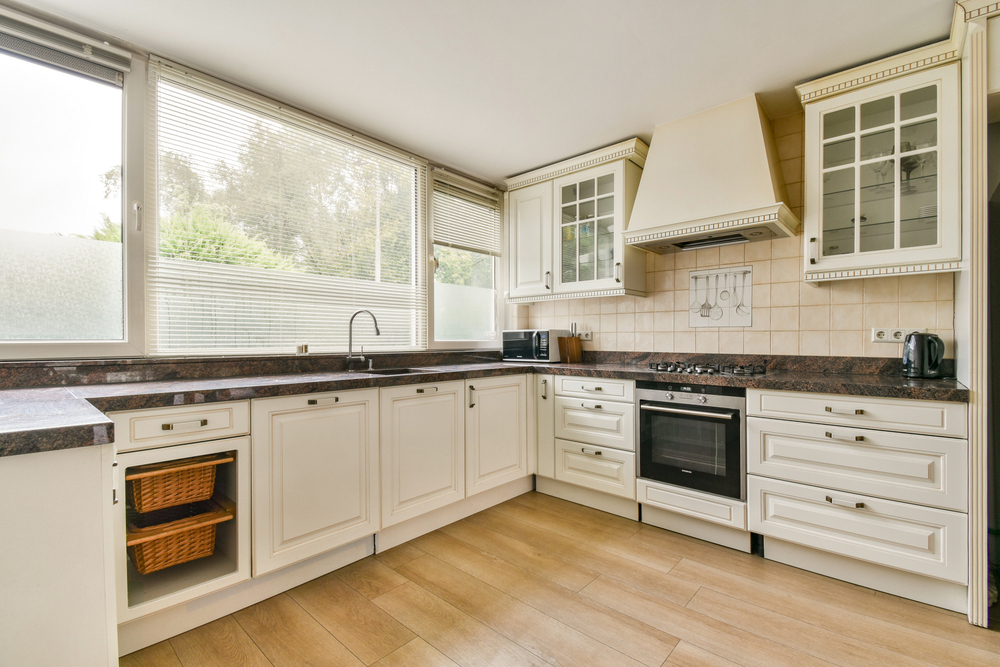
A spacious modern kitchen featuring white cabinets, granite countertops, and ample natural light through large windows, showcasing a minimalist aesthetic.
There’s no single best kitchen floor, only the best floor for how you actually live. Here’s a simple way to think it through:
If you have young kids or pets, lean towards vinyl or LVT. It shrugs off spills, claws and scratches far better than wood, and it’s kinder underfoot than tile – both for paws and for anyone who spends a lot of time thinking about pet-friendly flooring around the rest of the house too.
If you have underfloor heating, tile or engineered wood will make the most of it. Thick vinyl and laminate can work too, but always check the manufacturer’s heat rating first.
If your kitchen flows into a dining or living area, multi-layered wood or a wood-effect LVT will help the whole space feel joined up, rather than chopped into separate zones, which ties in with how flooring choices play out room by room across an open-plan home.
If you’re working to a tighter budget, laminate, standard vinyl, or lino will get you a smart-looking floor without the tile or hardwood price tag.
If you’re renovating to sell, it’s worth thinking beyond your own taste, since flooring can genuinely move the needle on resale value – safer, more neutral choices tend to appeal to a wider pool of buyers than a bold personal statement.
Whatever you’re drawn to, it’s worth steering clear of the flooring choices people tend to regret further down the line, particularly around overly trend-led colours and finishes that date quickly.
Final Thoughts
Choosing a kitchen floor is one of those decisions you’ll live with every single day, so it’s worth taking the time to get it right. Think about your household first, your style second, and you’ll end up with a floor that looks great and actually holds up to real life.
And if you’re weighing up flooring for more than just the kitchen, it’s worth stepping back and thinking about your whole home before you commit room by room.