
If you’ve searched for how to stop the cat from scratching the carpet, you already know the frustration – one favourite rug, slowly shredded, one claw-swipe at a time. The good news is that cats don’t scratch out of spite. They do it for specific, fixable reasons, and once you understand those reasons, stopping the behaviour gets a lot easier. At Funky Flooring, we know how much work goes into choosing the perfect carpet, so we’ve put together this guide to help you protect it – and keep your cat happy too.
Getting your cat to stop scratching the carpet takes a little patience and the right approach, but it’s absolutely doable. Here’s the ultimate guide to saving your carpet from cat scratches.
- Why Do Cats Claw the Carpet?
- How to Stop Cats Scratching Carpets
- Other Scenarios and Considerations
- Does Age Make a Difference?
- The Bottom Line
Why Do Cats Claw the Carpet?
There are four main drivers behind why cats claw at carpet:
- Marking their territory – cats have scent glands in their paws, so scratching leaves behind a smell that tells other animals this spot is theirs.
- Keeping claws in shape – it’s basically nail upkeep. Scratching helps peel away the worn outer layer of the claw.
- Working off energy – a good scratch stretches the back and shoulders and burns off any pent-up energy, which is why it often happens right after a nap or some zoomies.
- Liking the feel of it – looped carpet just grips better under claws than smooth flooring, so cats naturally gravitate toward it even without any real reason behind it.
Knowing the why helps you fix the actual cause instead of just reacting to the damage.
How to Stop Cats Scratching Carpets
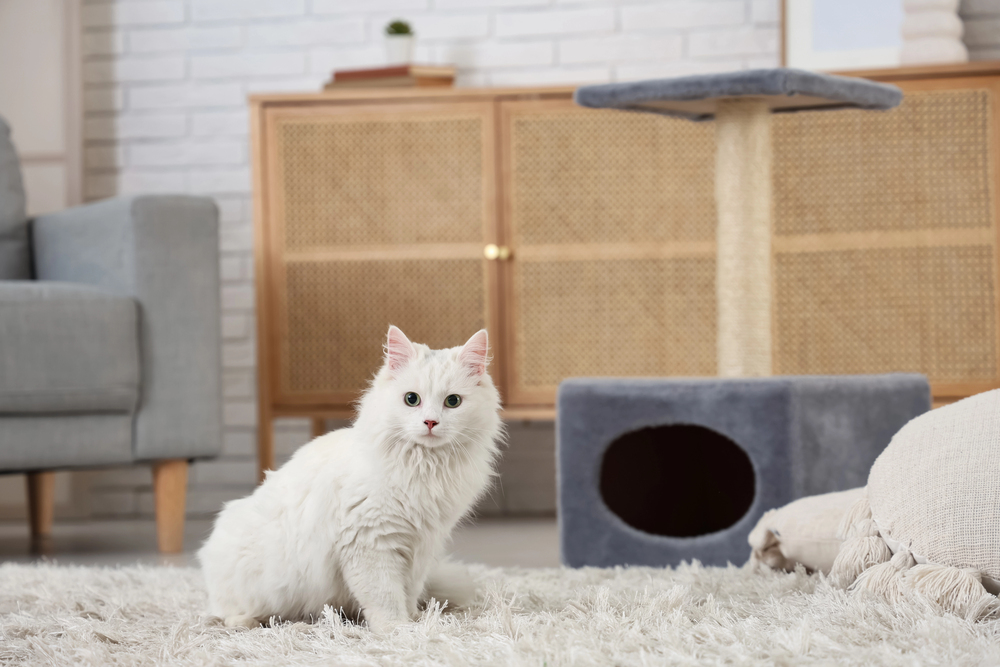
- Give them a better spot to scratch. Redirecting always works better than telling them off. Put a sturdy scratching post or a carpet-style scratch pad right next to the area they keep going for – cats tend to scratch wherever the urge hits, so if there’s an okay spot right there, they’ll usually use that instead.
- Pick something with a similar feel. If your cat likes carpet, go for a scratcher with a rough, rope-like (sisal) or looped surface instead of plain cardboard. This is usually the quickest way to stop them tearing up the carpet.
- Keep claws trimmed. Shorter claws cause less damage and don’t feel as satisfying to use, so cats naturally do it less.
- Cover the spots they keep targeting. A clear mat, a rough cover, or some double-sided tape makes the area feel wrong under their paws – great for corners, stair edges, and the edges of rugs.
- Use smells they don’t like. Most cats avoid citrus and eucalyptus. Test a small amount first, then dab a little on the problem area – it’s a low-effort way to keep them off the carpet.
- Tackle boredom. If your cat’s scratching all over the house, it’s usually got more to do with extra energy than the carpet itself. More playtime, a few puzzle toys, and places to climb (shelves, cat trees) can help burn that off.
- Reward the good behaviour instead of punishing the bad. Shouting or spraying water when you catch them scratching often makes things worse, since it stresses them out and can lead to more scratching. Instead, praise or treat them as soon as they use the scratcher.
Other Scenarios and Considerations
Most carpet scratching follows the same patterns, but a few situations call for a slightly different approach.
Rugs vs. Fitted Carpet
The fixes are the same either way, but rugs have one advantage: you can rotate or temporarily move a targeted rug out of reach while a scratcher takes its place, which isn’t as simple with wall-to-wall carpet. If you’re dealing with fitted carpet and thinking about swapping it out altogether, our guide on how to install carpet yourself walks through what’s involved.
Scratching Near Doors
Doorways get extra attention because the behaviour is often tied to territory or wanting your attention. Placing a scratcher directly in the target zone, adding a puzzle toy nearby, and using a pheromone diffuser if it’s linked to separation anxiety all help stop the pattern before it wears a visible track into the carpet.
Protecting Other Flooring Types
Carpet and rugs aren’t the only surfaces pets can affect. Hard flooring like vinyl tiles and laminate can pick up scratches from claws too, while artificial grass in outdoor areas has its own wear patterns from regular pet use. If you’re weighing up flooring options for a pet-friendly home, it’s worth looking at how each material holds up over time before you commit.
When to See a Vet
Sudden, aggressive scratching – especially paired with hiding, appetite changes, or increased vocalising – is worth checking with a vet before assuming it’s just habit. A cat that never used to claw carpet and suddenly starts is sending a signal worth investigating.
Does Age Make a Difference?
Kittens scratch for the same core reasons as adult cats, but the habit is easier to redirect early since it hasn’t had time to become routine. Introducing a scratcher as soon as a kitten arrives – ideally somewhere near their favourite spots – often prevents carpet scratching from becoming a habit at all.
Older cats, on the other hand, may have been scratching the same rug or corner for years, which makes the behaviour more ingrained. It doesn’t mean it can’t be fixed, but it usually takes a bit more patience and consistency to shift a habit that’s had time to set in. Sticking with the redirection and texture-matching tips above will still work – it just may take slightly longer for an older cat to fully make the switch.
The Bottom Line
There’s rarely a single trick that stops carpet scratching overnight. The real fix is usually a mix of redirection, texture-matched alternatives, and removing the boredom or stress driving the habit. Give it two to three weeks of consistency, and most cats fully transfer the behaviour away from the carpet for good.