
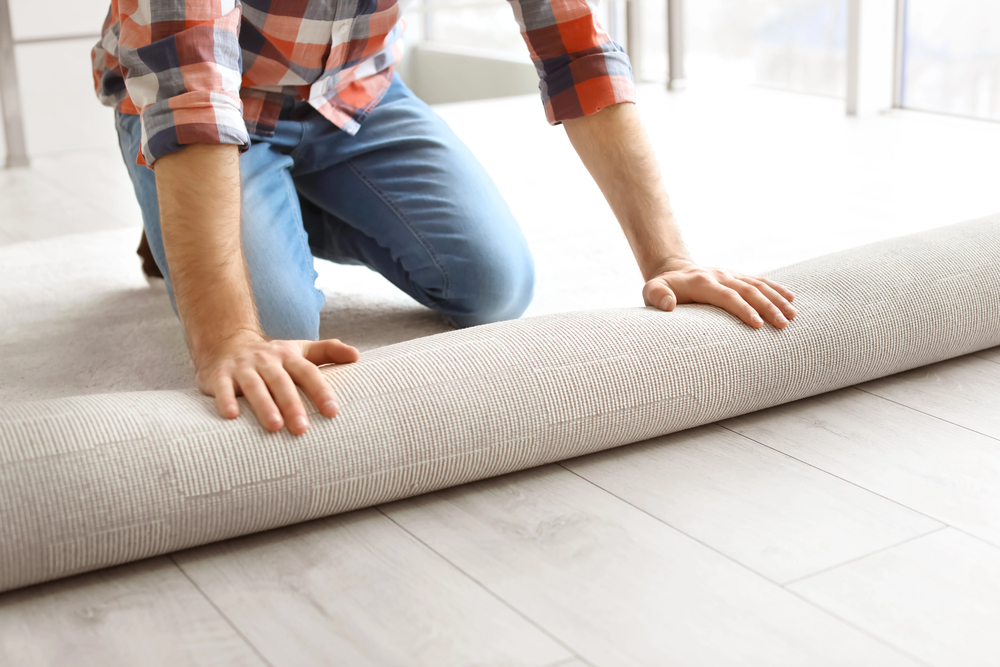
Installing a carpet yourself can save money and give you the satisfaction of transforming a room with your own hands. While it requires patience, attention to detail, and the right tools, a DIY carpet installation is achievable: even for first-time installers. This guide from Funky Flooring will take you through every step of how to install carpet yourself – from preparation to finishing touches.
Unsure if carpet is best for the room you’re debating? Take a look at our handy guide to flooring!
Tools & Materials You’ll Need To Install Carpet Yourself
Before you start, gather everything you’ll need:
- Carpet roll
- Carpet underlay (foam or rubber-backed)
- Carpet gripper (also called tack strips)
- Knee kicker
- Carpet stretcher / power stretcher
- Carpet knife or utility knife
- Measuring tape
- Chalk line
- Hammer and nails
- Staple gun (optional)
- Carpet seaming tape (for joining pieces)
Step 1: Prepare the Room
Preparation is key for a smooth installation:
- Remove all furniture and any existing flooring if necessary.
- Clean the subfloor thoroughly: vacuum or sweep debris.
- Check for uneven areas. Use a floor leveller if needed.
- Remove skirting boards or baseboards carefully if required for a tight fit.
Step 2: Install Carpet Grippers
Carpet grippers hold the carpet in place along the edges:
- Measure around the room and mark where the grippers will go, typically 1/2 inch from the wall.
- Cut grippers to fit and nail them to the subfloor with the pins pointing towards the wall.
- Make sure to leave a small gap at doorways or transitions.
Step 3: Lay the Underlay
A good underlay provides comfort, insulation, and extends the life of your carpet:
- Roll out the underlay across the floor, keeping seams tight.
- Staple or tape seams together according to manufacturer instructions.
- Trim edges so the underlay fits neatly against walls and grippers.
Step 4: Measure and Cut the Carpet
Accurate measuring ensures a professional finish:
- Measure the room carefully, adding 10–15cm extra on all sides for trimming.
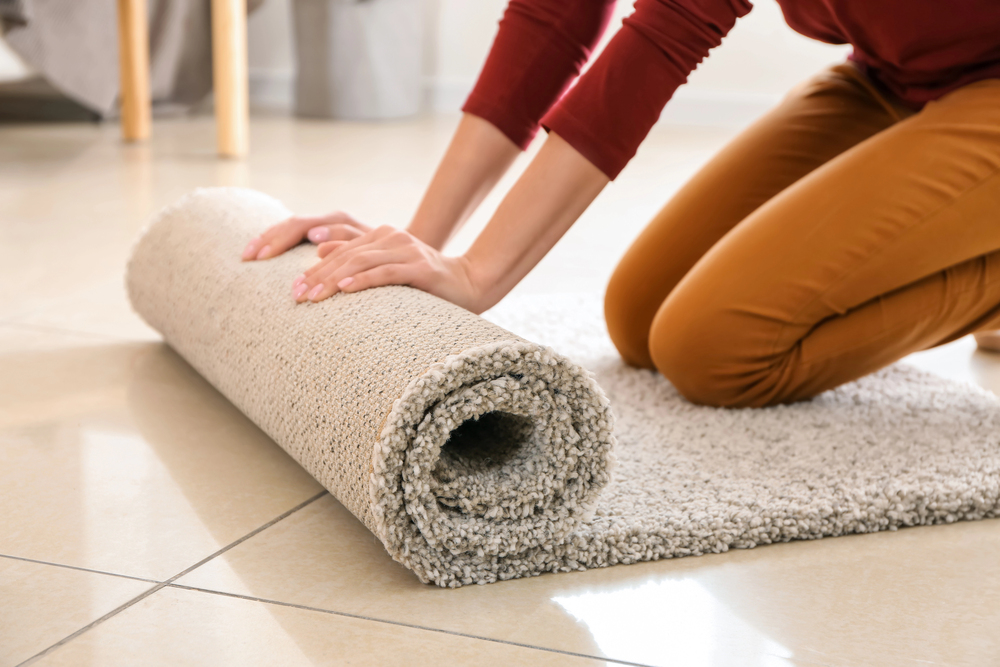
- Roll out the carpet face down.
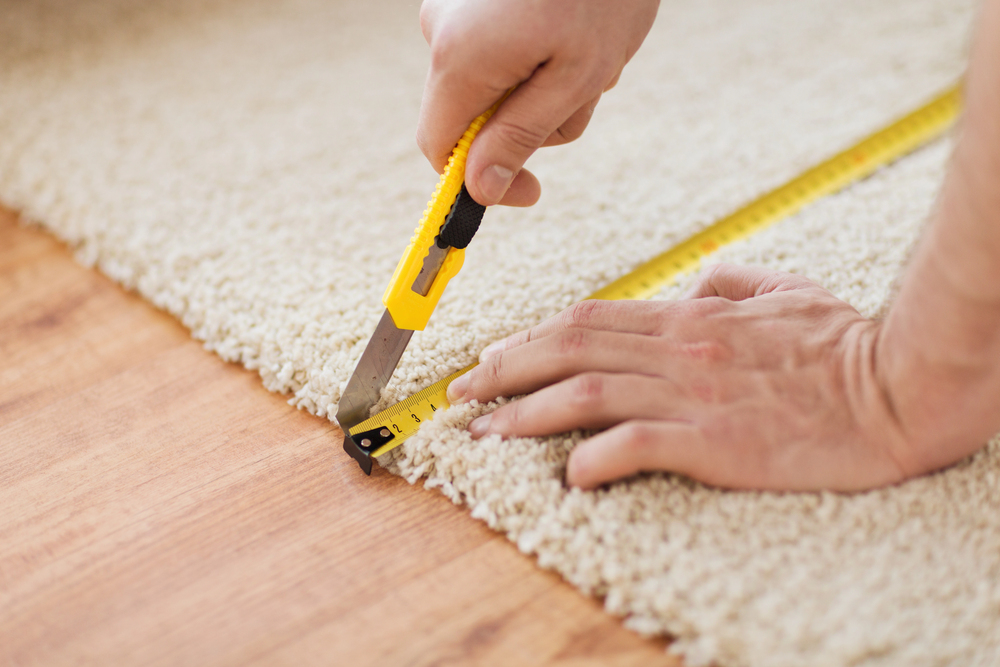
- Cut using a carpet knife, following your measurements.
- If the room requires multiple pieces, ensure the carpet pile runs in the same direction.
Step 5: Fit the Carpet
- Position the carpet in the room, leaving the extra edges for trimming.
- Use a knee kicker to stretch the carpet towards the walls.
- Hook the carpet onto the grippers along one wall.
- Continue stretching and securing the carpet along all walls.
Step 6: Join Seams (if needed)
For rooms requiring multiple carpet pieces:
- Lay the pieces next to each other with the pile running the same direction.
- Place carpet seaming tape underneath the joint.
- Heat the tape (if recommended) to fuse the seam, then press the pieces together.
- Trim any excess for a neat finish.
Step 7: Trim and Finish Edges
- Use a carpet knife to trim excess along walls and around doorways.
- Tuck edges under skirting boards or use a carpet tucker.
- Reinstall any baseboards or door trims.
Step 8: Final Checks
- Walk across the room to ensure the carpet is secure and stretched evenly.
- Vacuum to remove loose fibres.
- Enjoy your freshly installed carpet!
Tips for a Smooth DIY Carpet Installation
- Always measure twice before cutting.
- Stretch the carpet gradually to avoid wrinkles.
- Work slowly in corners and around doorways.
- If unsure about seams or complicated rooms, consult a professional.
DIY Carpet Installation FAQ
Can I install a carpet myself?
Yes! With the right tools, preparation, and patience, a DIY carpet installation is possible. Simple rooms with minimal corners and one carpet piece are the easiest to tackle. If you’re comfortable with basic tools like a carpet knife, knee kicker, and tape measure, you can manage a professional-looking finish.
When do I need a professional carpet installation?
Some situations are better left to professionals, including rooms with irregular shapes, multiple corners, or unusual layouts and large areas that require power stretching equipment. You might also opt for a professional with carpets with intricate patterns or seams that must align perfectly.
Professional installers ensure the carpet is stretched correctly, seams are invisible, and the finish is long-lasting.
How long does it take to install a carpet yourself?
For a standard-sized room (10–15m²), expect 3–6 hours for a first-time installer, including preparation and trimming. Larger or more complex rooms may take a full day or longer.
Do I need to remove old flooring before installing carpet?
It depends on the type of old flooring. Remove old carpets and underlay. For vinyl or tile, you can often lay carpet over it if the surface is smooth, clean, and level. However, removing old flooring ensures a more secure and professional finish.
What type of carpet is easiest to install?
Loop pile or low-pile carpets are generally easier for DIY installation because they are more forgiving during stretching and trimming. Thick plush carpets can be more challenging, especially for seams and corners.
Do I need special tools for stretching the carpet?
Yes, a knee kicker or power stretcher is highly recommended. A knee kicker is suitable for smaller rooms, while a power stretcher is better for large rooms and ensures the carpet is tensioned correctly to avoid wrinkles or buckling.
Can I reuse underlay when installing a new carpet?
Generally, it’s best to replace old underlay when installing a new carpet. Over time, underlay compresses and loses its cushioning and insulation properties. A fresh underlay ensures comfort, durability, and a longer lifespan for your carpet.
DIY Carpet Installation
DIY carpet installation is a rewarding project that can transform your home while saving money. By following the right steps and using the appropriate tools, anyone can achieve a professional finish. For more guidance or to choose the perfect carpet for your project, Funky Flooring offers a wide range of styles and materials, from cosy wool carpets to durable, easy-care synthetics.
Keen to keep your newly installed carpet looking great? Take a look at our guide to keeping carpets clean and remove stains!
Want to know what’s on trend for 2025? Read our guide to trendy 2025 floor styles.